Find a Silhouette That Gives the Appliqués Room to Work
Look at the full dress before studying individual flowers or lace motifs. The silhouette determines where the decoration sits, how much space surrounds it and what happens to the pattern when you move.
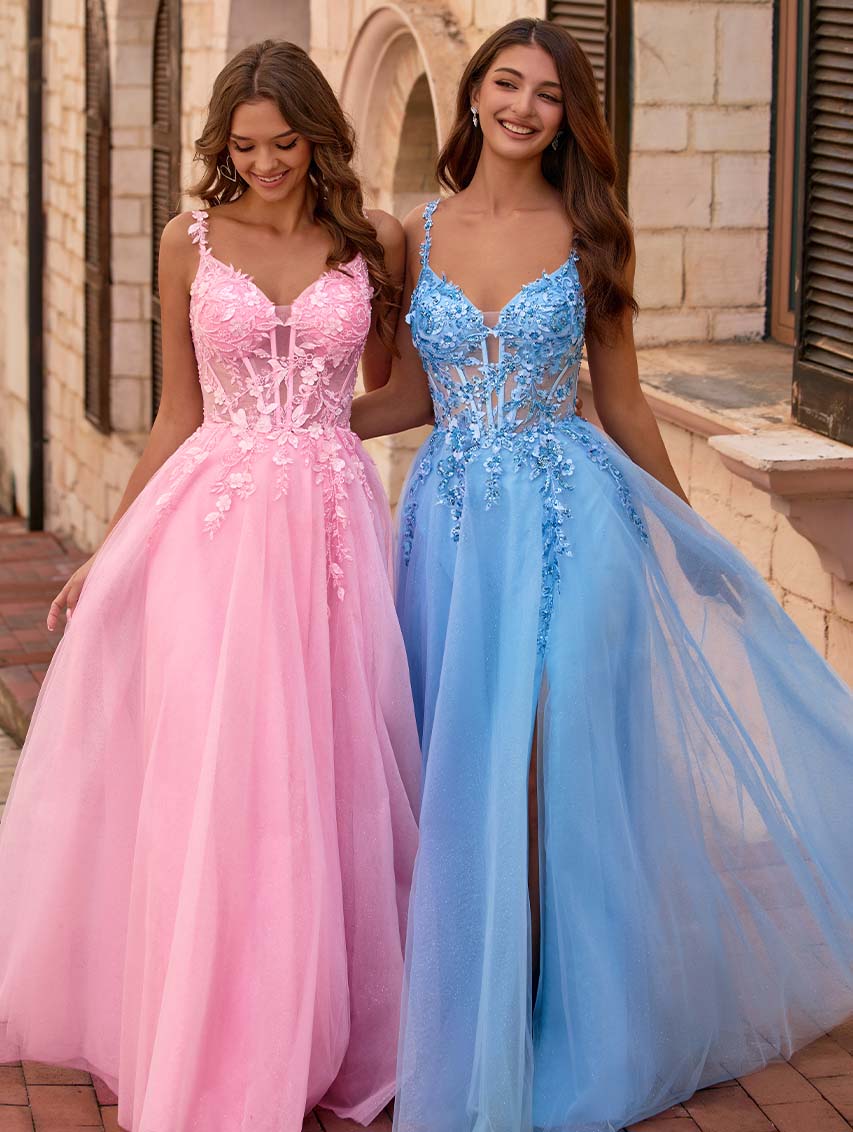
A-Line Dresses with Appliqués Extending into the Skirt
An A-line prom dress gives a decorated bodice space to continue below the waist. Motifs that gradually become more scattered can soften the transition into the skirt, while a clearly defined waist keeps the upper and lower halves visually separate. On tulle, appliqués appear against layered fabric, creating depth as the skirt opens and folds. Compare a densely decorated upper skirt with a more open arrangement. The first carries the bodice detail farther down; the second leaves more of the flowing fabric visible.
Fitted and Mermaid Gowns with a Continuous Pattern
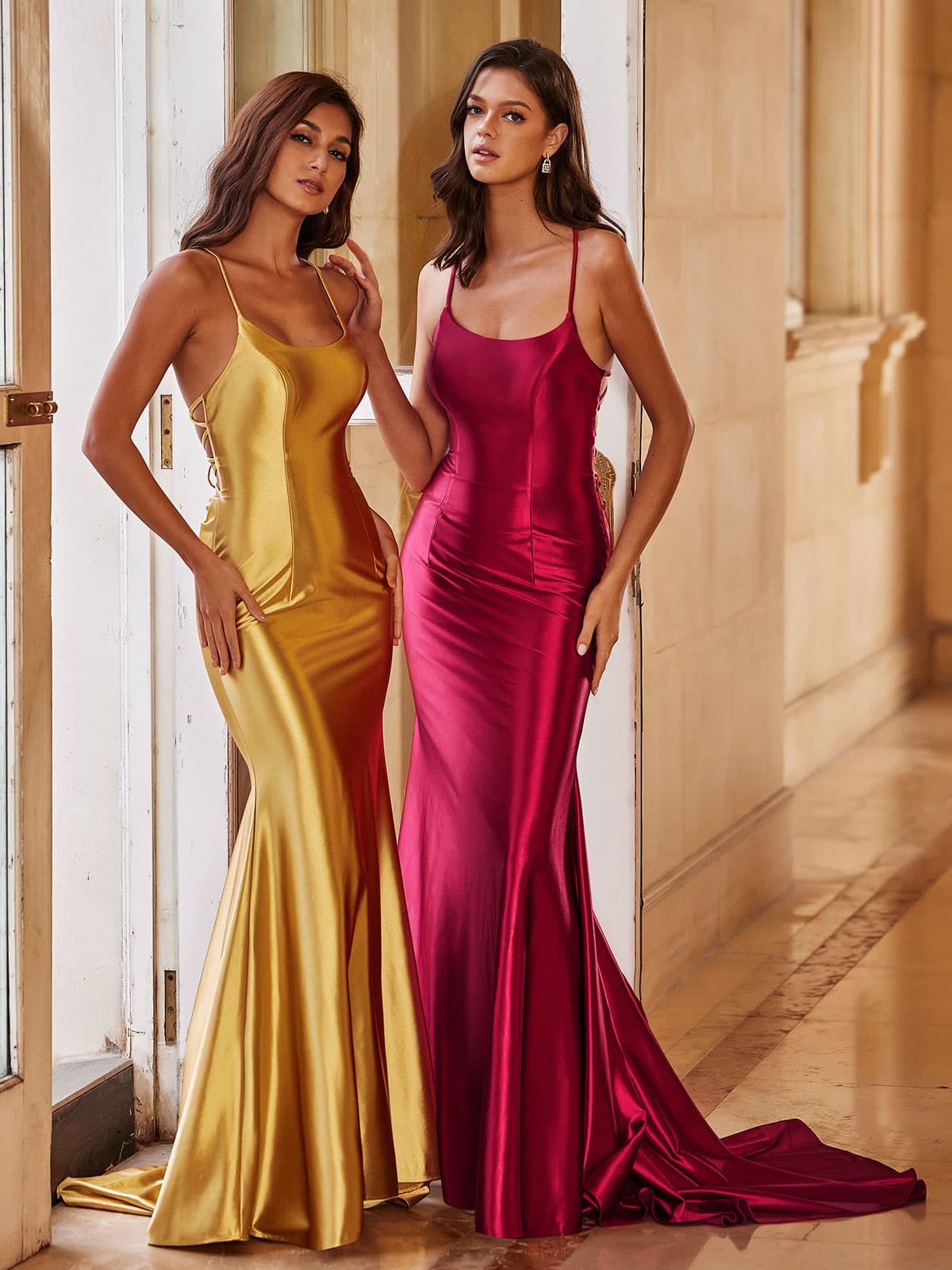
On a fitted prom dress, appliqué placement becomes part of the outline. A trail of leaves or lace can continue from the bodice over the hips, while decoration concentrated above the waist leaves the lower skirt smoother. For a mermaid gown, notice what happens where the skirt flares. Motifs continuing into the flare connect the entire dress, while a plain or ruffled lower section creates a distinct change in texture. Choose the effect you want to see in a full-length photograph, then check how the fitted section allows you to move.
Full Skirts and Ball Gowns with Scattered Detail
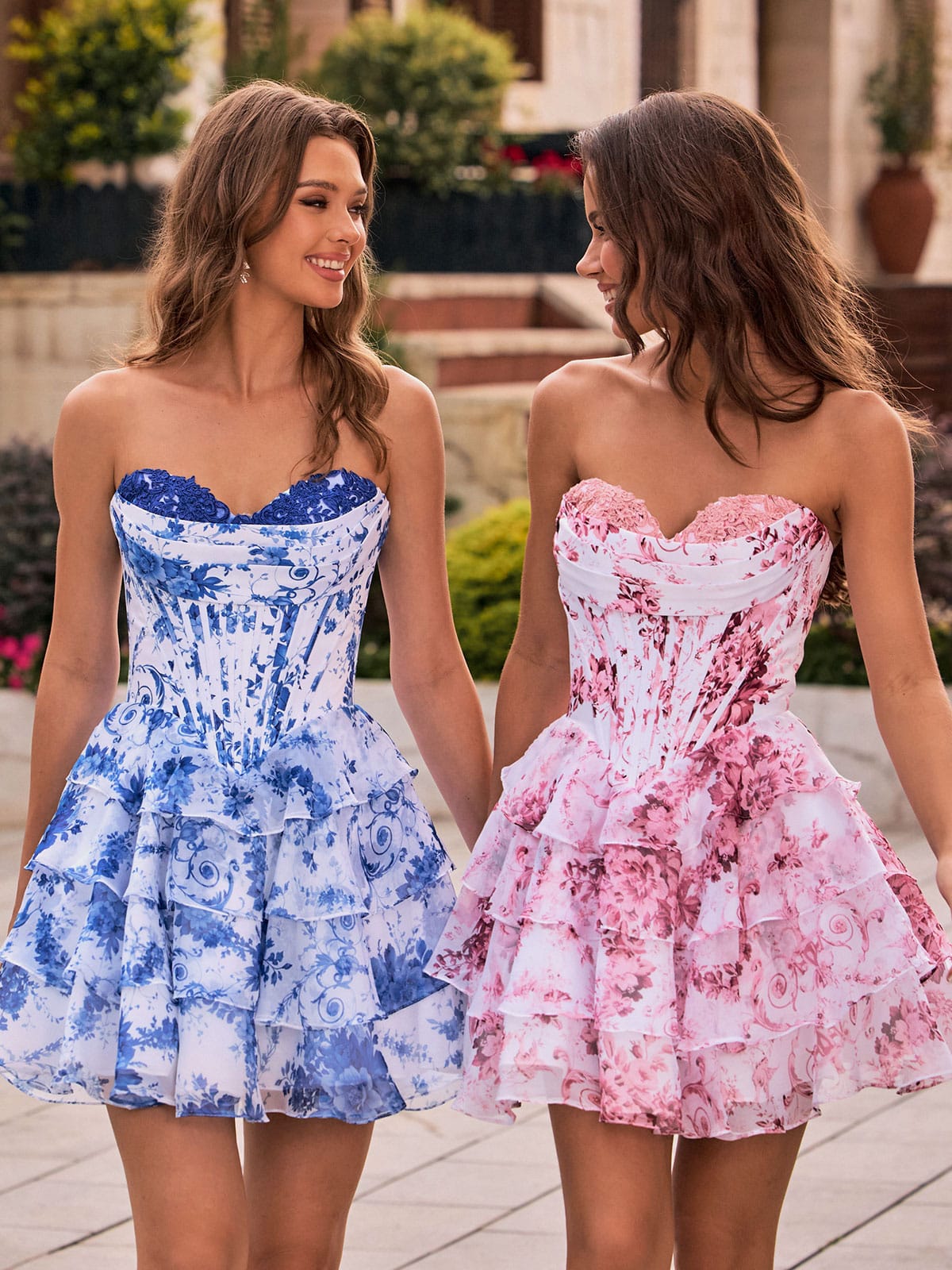
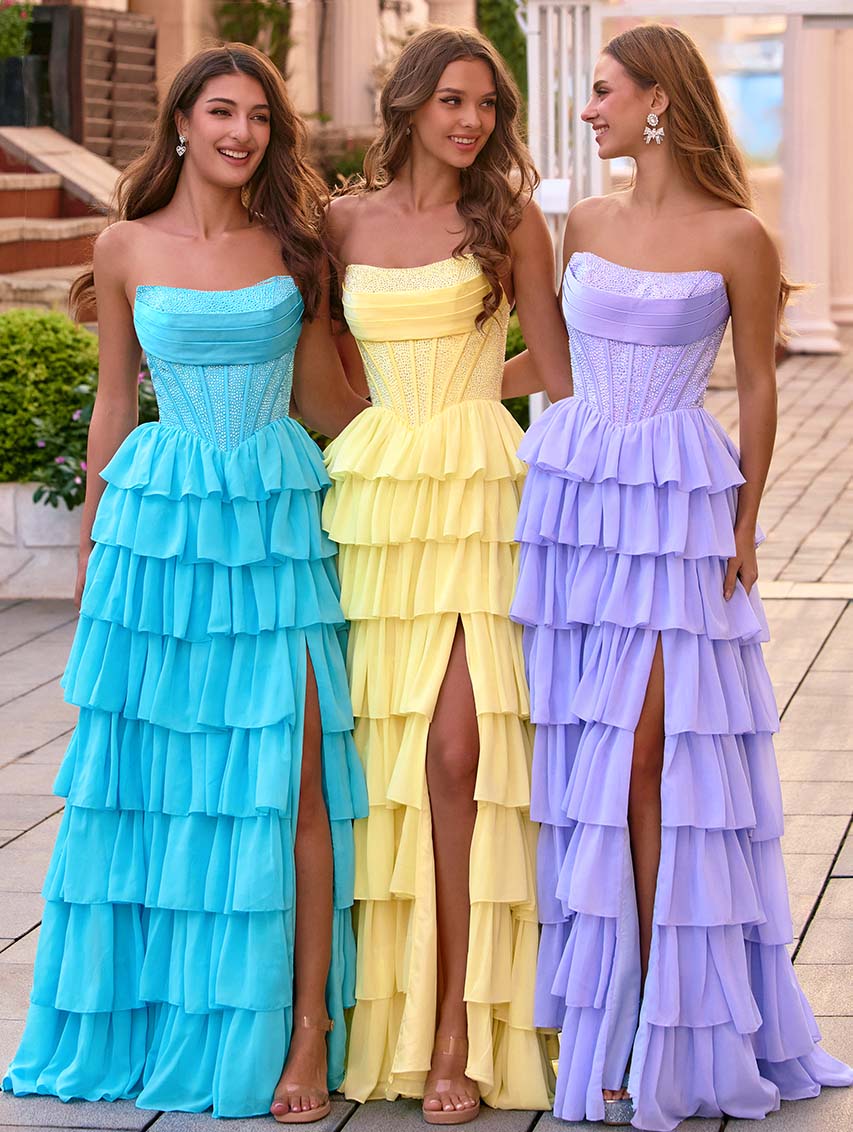
A full skirt provides a larger surface for appliqués, so their scale and spacing matter. Small motifs can create an intricate pattern, while larger floral shapes remain more noticeable from a distance. If the skirt also includes ruffles, consider which detail you want to lead. A decorated bodice above mostly plain tiers emphasizes volume and movement. Appliqués distributed across the skirt make the pattern a larger part of the entrance.
Choose How the Appliqués Frame the Bodice
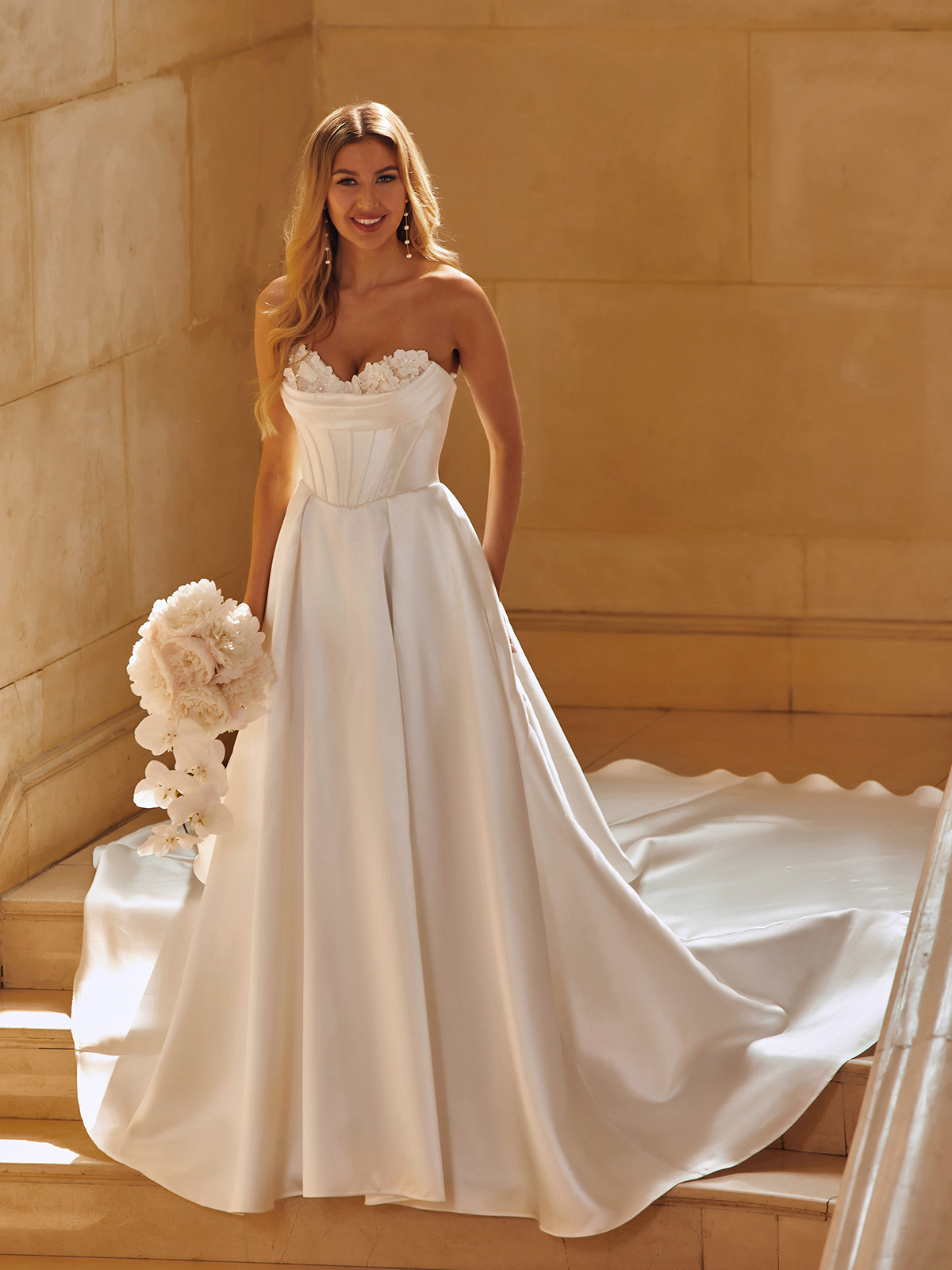
The upper half of the gown deserves a close look because it appears in portraits, seated photos and pictures with friends. Appliqués around a sweetheart neckline can follow its curves, while motifs along a V-neck can trace the opening toward the waist.
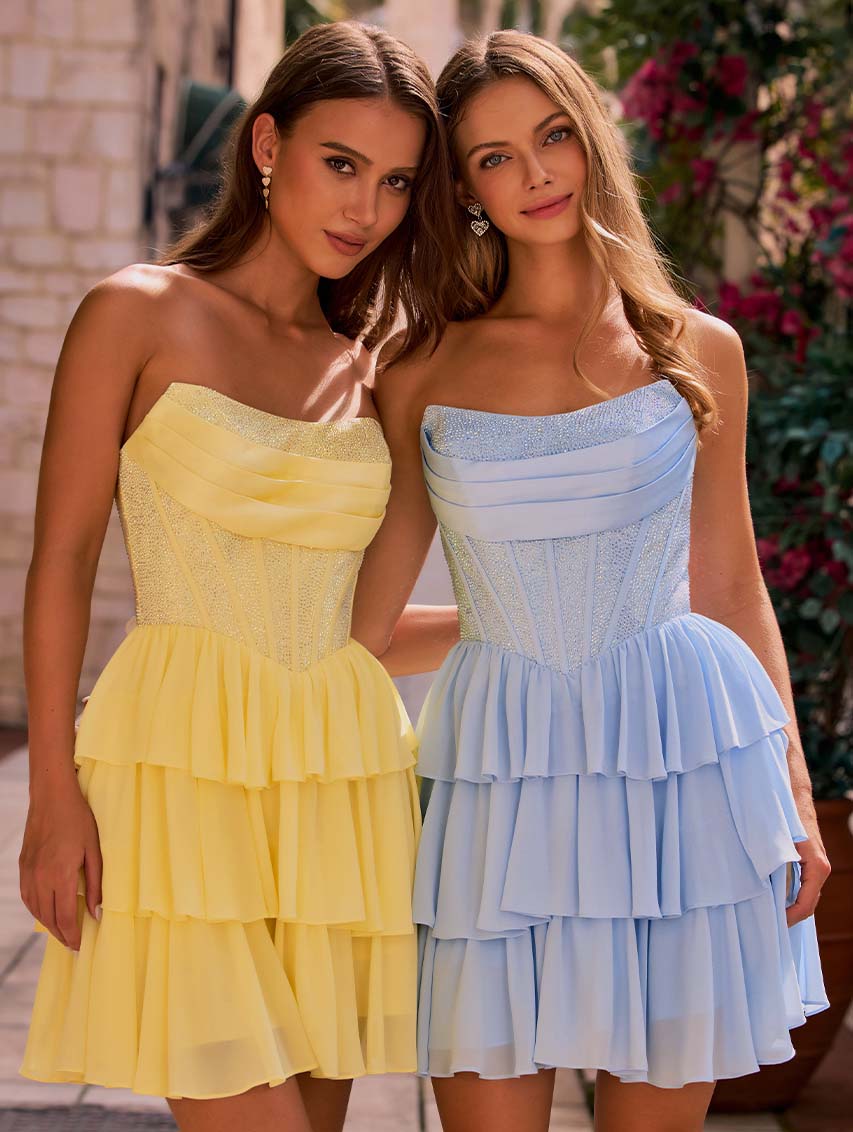
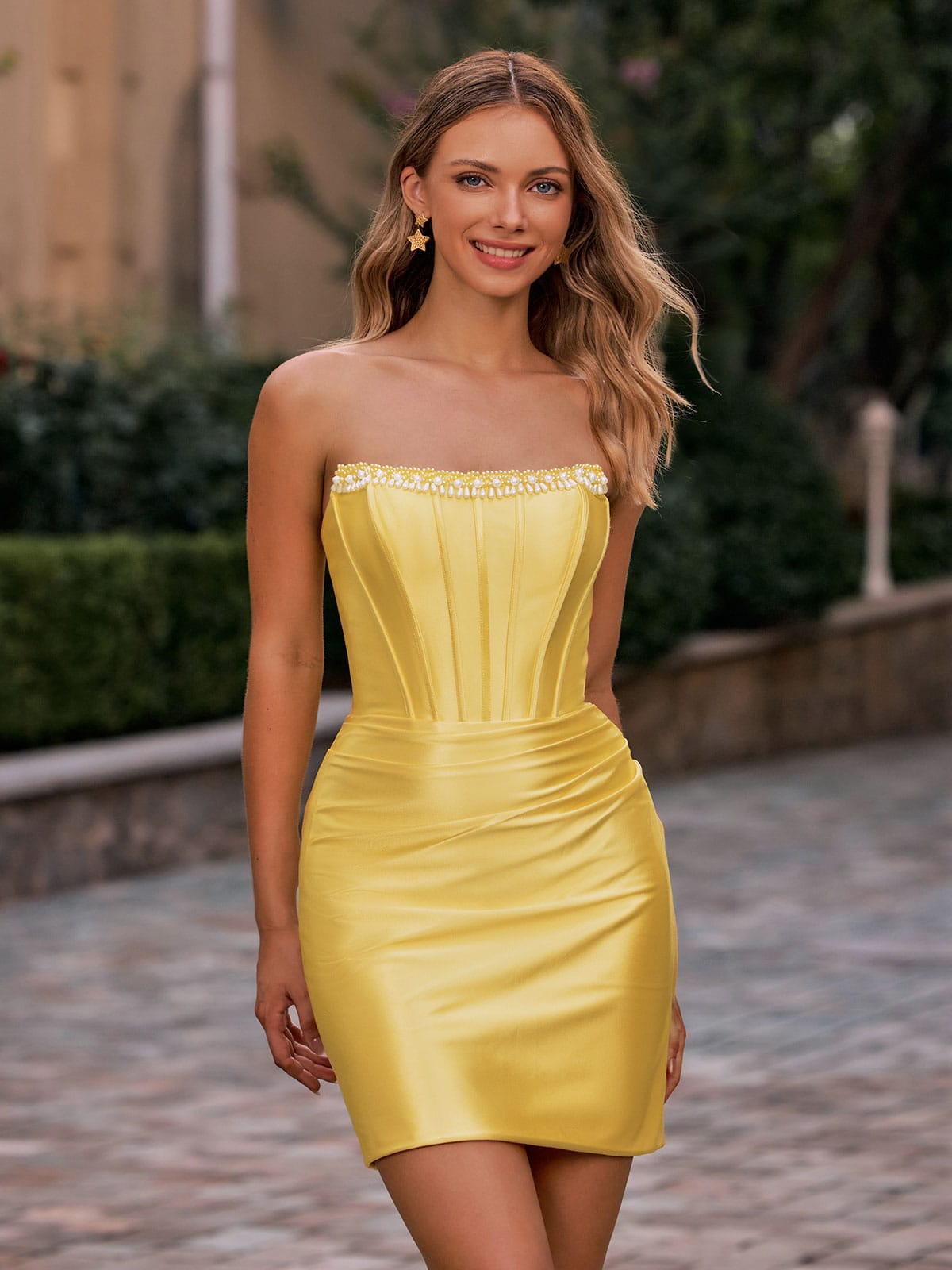
On an applique corset prom dress, compare the decoration with the seam lines. Lace following the panels makes the structure visible; flowers crossing those lines create a more continuous surface. A draped satin section beside a textured panel introduces another contrast without requiring decoration across the whole bodice.
With an illusion bodice, the backing and lining are as important as the appliqués. Motifs may create areas of coverage, but the spaces between them can remain sheer. Review close-up images and construction details to understand the actual coverage and support.
Check the side and back views too. A pattern that continues around the bodice creates a different finish from a decorated front with a simpler back. Shoulder appliqués, an open back or a lace-up closure can also influence your hairstyle and jewelry choices.
Decide What Kind of Texture You Want for Prom
Appliqué describes decorative pieces attached to a base fabric. The effect can be subtle or pronounced: flat lace motifs add pattern, while layered petals introduce more visible dimension. Beads and sequins may be added to the motifs, but appliqué does not automatically mean sparkle.
Tonal Lace for Detail within One Color
Appliqués close to the gown's base color create interest through edges, texture and overlapping shapes. This approach works well when you want the silhouette to remain prominent and the decoration to reveal itself at closer range. Look at the contrast between the motif and its background. The same lace can appear more defined against smooth satin than against another textured surface. On sheer tulle, the lining color also contributes to the final effect.
Floral Motifs for a Clear Focal Point
Floral applique prom dresses can place the emphasis at the neckline, waist or skirt. A cluster near one shoulder creates an asymmetric detail, while a trail crossing the waist connects the bodice to the lower half. Choose the scale according to the look you enjoy. Larger motifs make individual shapes easier to notice, while smaller flowers create a more detailed surface. Review both close-up and full-length images so the pattern appeals to you at both distances.
Beaded Appliqués for Evening Sparkle
Beads or sequins on an appliqué can highlight parts of the motif under changing light. Decoration concentrated on the bodice brings sparkle into portraits, while scattered accents through the skirt become more apparent as you turn. Consider those accents alongside slits, trains and ruffles. A gown can combine several features successfully when their placement feels connected. For example, a smooth skirt lets a beaded floral bodice stay prominent, while simpler upper detailing leaves more attention for a decorated train.
Think About Texture in Motion
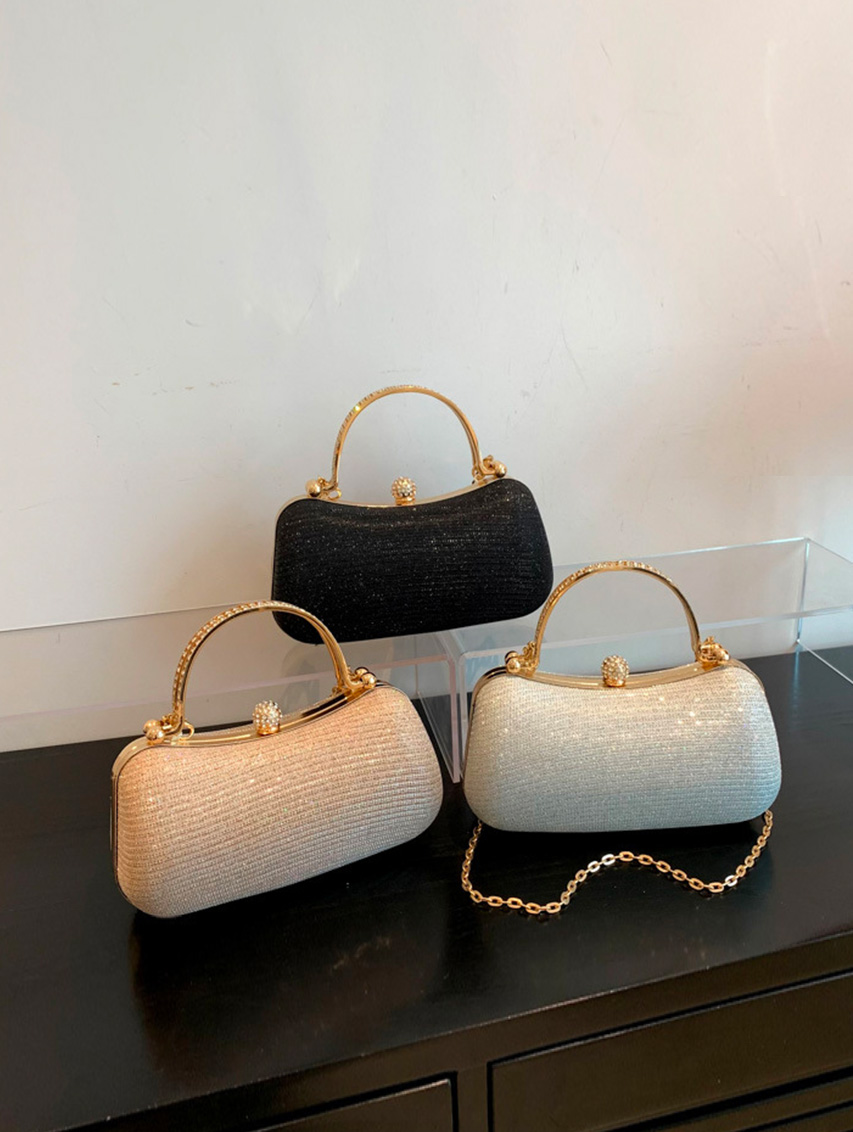
At prom, the dress will fold, turn and brush against your arms as you sit and dance. During a try-on, check appliquéd areas near the underarms and neckline for comfort, particularly where beads or raised edges meet the skin. The base fabric, lining and cut determine much of the gown's movement. A heavily decorated area may feel different from an undecorated section, so try sitting and taking full steps rather than judging comfort from the silhouette alone. Wear your planned accessories during a final try-on. A textured bracelet or embellished bag can catch on lace or raised petals when held against the dress. Check how the pieces work together as you move your arms naturally. If the hem needs shortening, show the alteration professional any appliqués near the bottom before deciding where to adjust the length. Their placement may need to be preserved or repositioned to keep the skirt's pattern balanced.
Style the Outfit around the Dress's Motifs
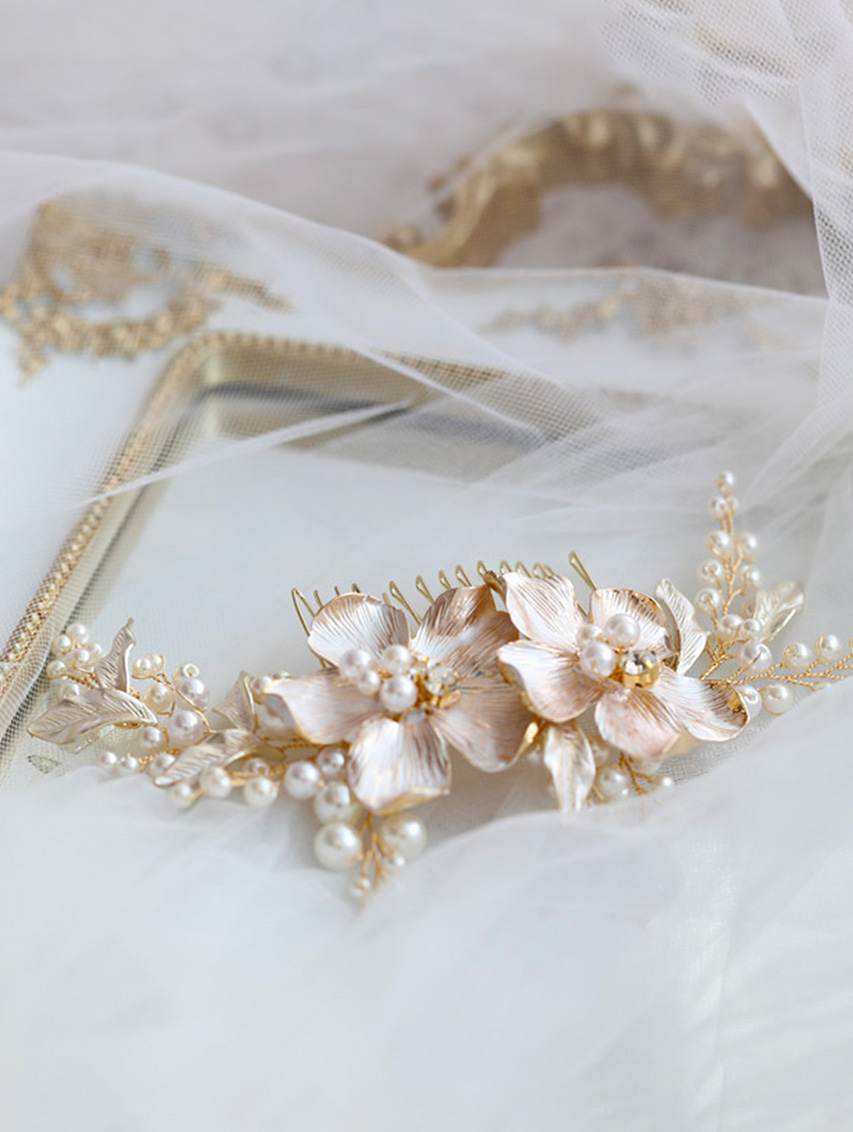
Use one element of the appliqués as a starting point for the rest of the outfit. Pearl accents can connect with pearl earrings, metallic beading can guide the jewelry finish, and a contrasting flower color can be repeated in a clutch or hair accessory.
A neckline covered in lace or flowers may feel complete with earrings alone. If the decoration sits mainly at the waist or skirt, a simpler neckline leaves more space for a necklace. Choose jewelry that sits comfortably beside the appliqués rather than overlapping their edges.
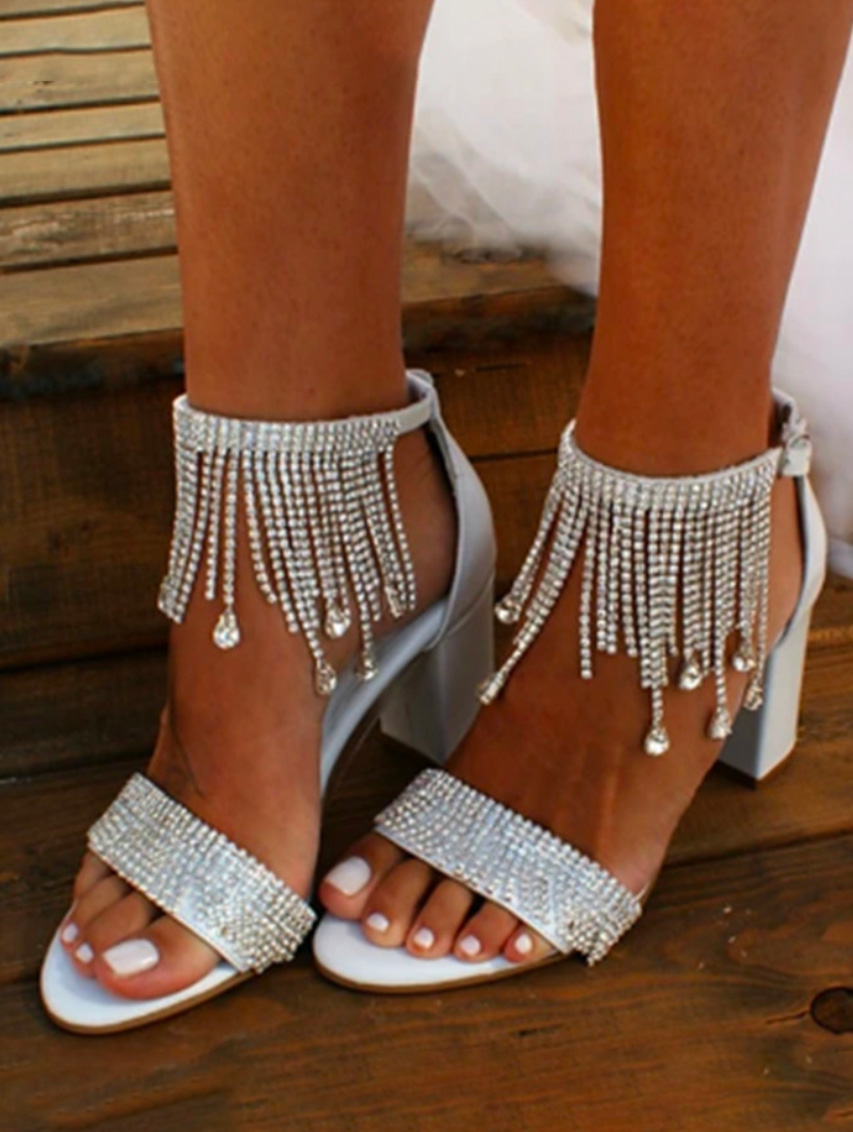
For shoes, consider the base color of the gown as well as the embellishment. A simple shoe in a coordinating shade keeps attention on the dress, while a metallic finish can repeat its beadwork. A smooth clutch is an easy partner for a richly textured skirt.
Hair swept away from a decorated shoulder or back lets those details remain visible. For flowers or a date's accessories, repeating one color from the gown can connect the looks without copying the entire floral pattern.
Explore more prom dresses to compare silhouettes and finishes, or browse corset prom dresses if a defined bodice is central to your look.
Applique Prom Dresses FAQs
What is an applique prom dress?
An applique prom dress has decorative pieces attached to its base fabric, such as lace motifs, flowers or leaf shapes. These details may lie relatively flat or have raised layers, and some include beads or sequins for added sparkle.
How is appliqué different from embroidery or a floral print?
Appliqué uses separate decorative pieces attached to the fabric. Embroidery creates a design with stitches, while a floral print places the pattern on the fabric's surface through printing. A single prom dress can combine more than one of these techniques.
Which silhouette should I choose for an applique prom dress?
An A-line gives motifs room to extend from the bodice into a flowing skirt. Fitted and mermaid gowns let the decoration follow a closer outline, while ball gowns provide space for larger or more widely scattered patterns. Compare the placement as well as the shape.
Are all floral appliqués three-dimensional?
No. Some floral appliqués lie close to the base fabric, while others use layered petals or raised elements. Check close-up images and the product description to understand the texture rather than assuming every floral design has a pronounced 3D effect.
Does an appliquéd corset bodice provide full coverage?
Coverage depends on the lining, backing and spaces between the motifs. Appliqués over an illusion panel may leave parts of the bodice sheer. Review the individual dress's construction and images to assess coverage and support.
Should I choose a decorated bodice or appliqués throughout the skirt?
A decorated bodice keeps attention near the face and waist, while skirt appliqués contribute more to the full-length look. Choose a gradual arrangement if you want the pattern to connect both areas, or a distinct division if you prefer contrast between texture and plain fabric.
What should I check before wearing an applique prom dress for dancing?
Check freedom of movement, the hem length and how textured areas feel near your arms and neckline. Try the dress with your jewelry and bag to see whether anything catches on the motifs. Comfort depends on the base dress and embellishment together.
How should I accessorize an applique prom dress?