Match the V-Back to the Shape of the Skirt
Start with the full-length rear view. Follow the two edges of the V to their meeting point, then look at how the skirt continues below. The distance between that point and the waist, together with the skirt's fullness, establishes much of the gown's rear silhouette.
A-Line Gowns with a Clear Waist
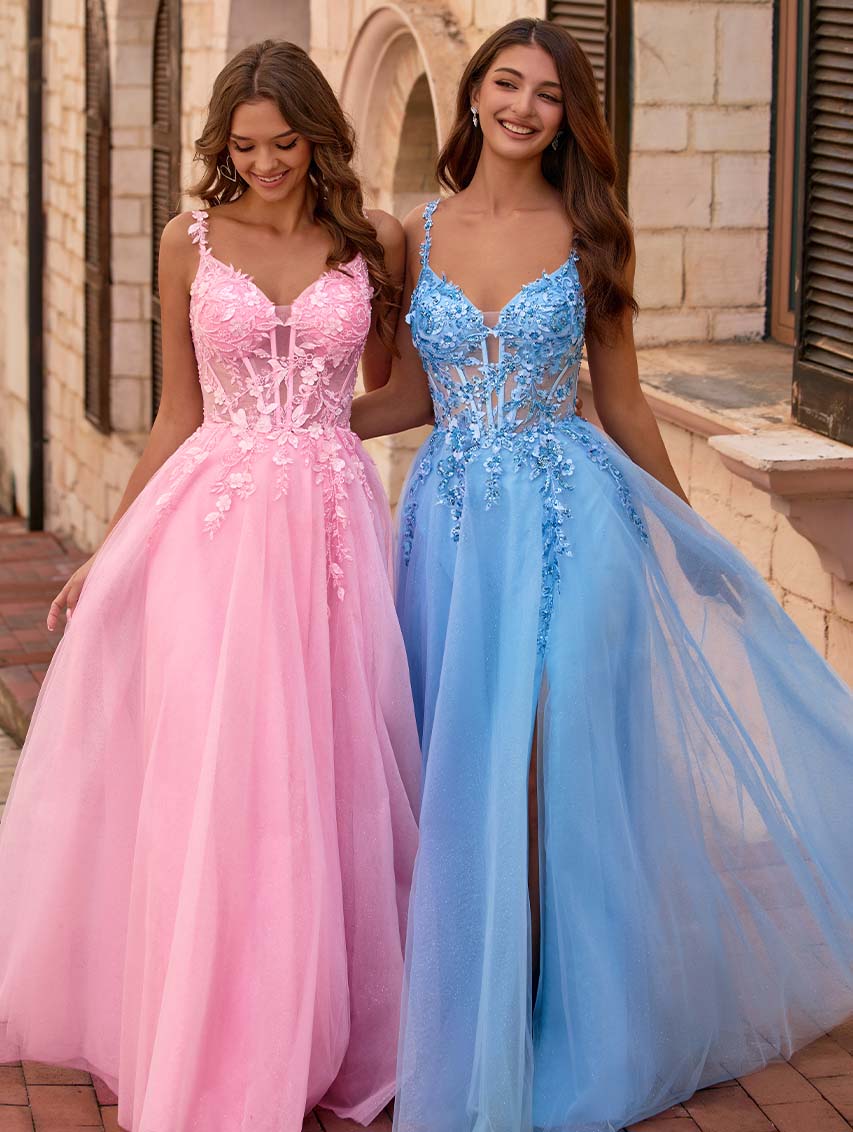
An A-line skirt opens outward beneath the inward-pointing lines of a V-back. This change in direction creates a distinct upper and lower shape, especially when the bodice ends at a clearly defined waist. Choose a gently flowing skirt if you want the backline to remain prominent. A fuller tulle skirt gives the gown more volume, while appliqués extending below the waist can soften the transition between the bodice and skirt. Compare how sharply or gradually you want those sections to connect.
Fitted and Sheath Dresses with a Longer Line
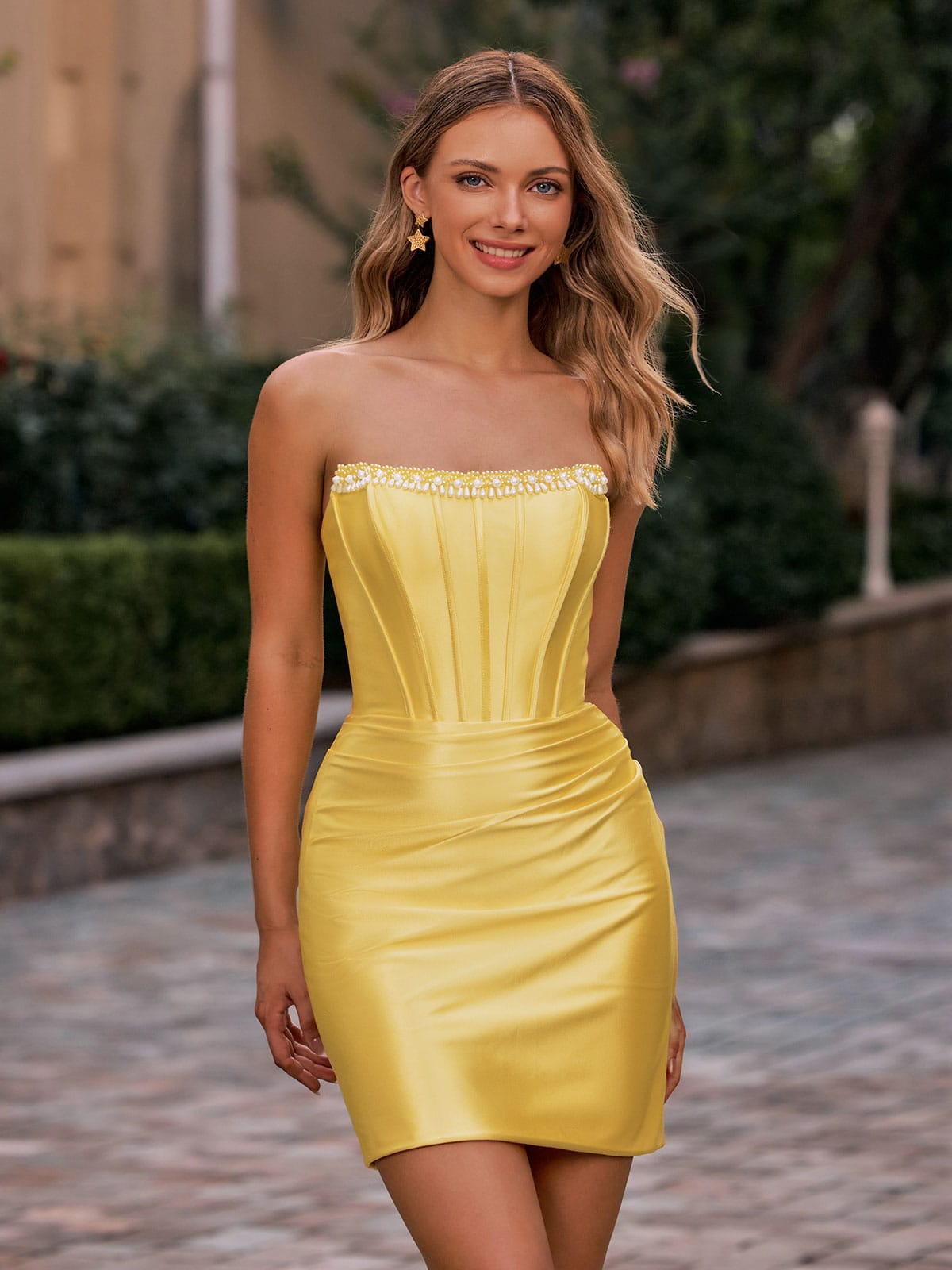
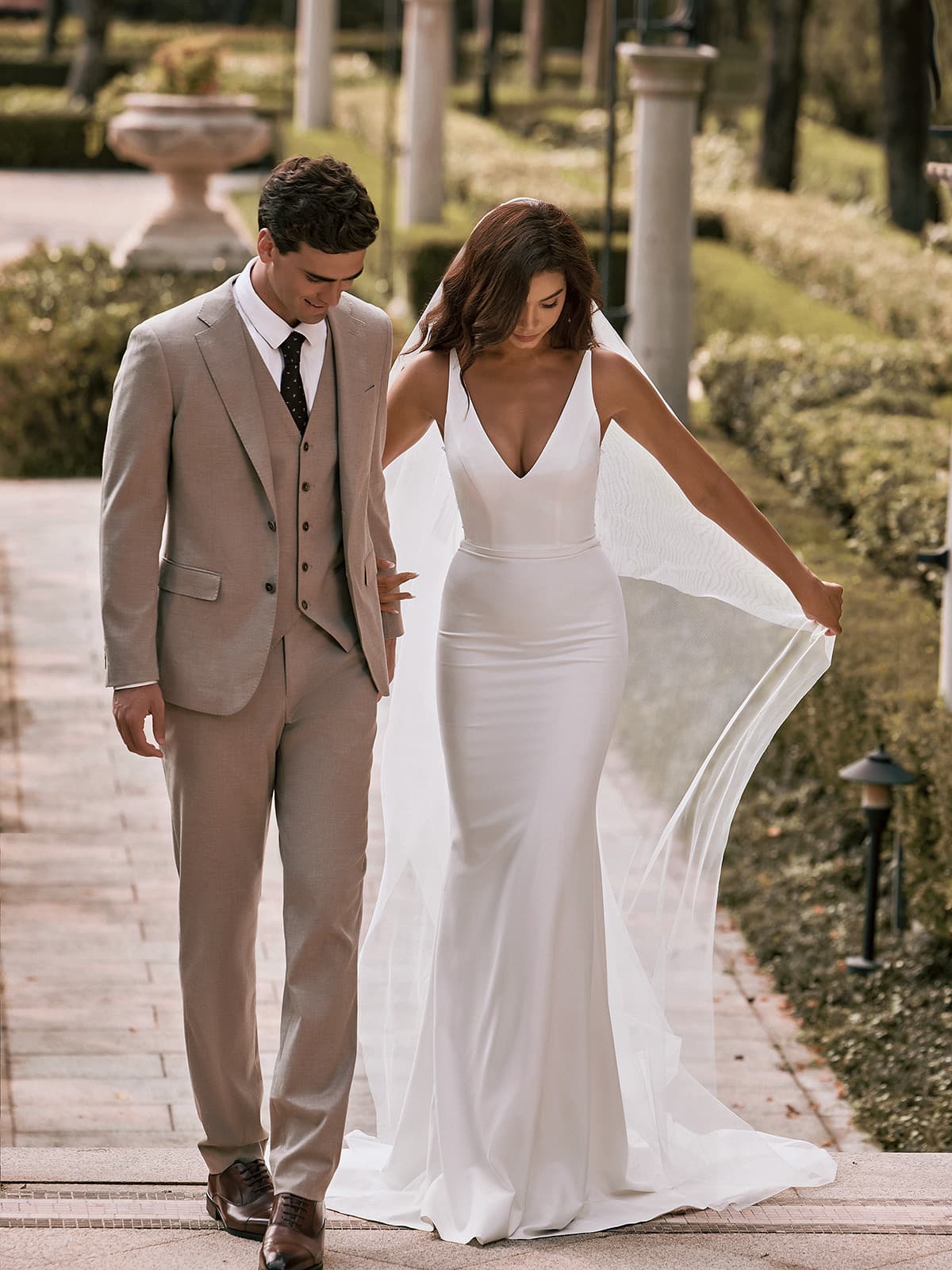
A straighter skirt continues below the V without adding much width. This makes the back detail an important part of a relatively streamlined gown. A smooth fabric emphasizes the outline, while draping introduces folds around the waist or hips. Look at where gathering begins below the backline. Folds placed close to the point of the V draw attention to that meeting area. A smoother finish lets the shape of the opening stand on its own.
Mermaid Dresses with a Flared Finish
A V-back mermaid prom dress places a defined upper detail above a fitted skirt and lower flare. The eye can follow the gown from the shoulders toward the waist, then outward again near the hem. Decide how much emphasis you want at each end. A simple V above a decorated flare keeps most of the texture lower down, while an embellished backline above a smooth skirt makes the bodice more prominent. Check the side view and the position of the flare before choosing the final shape.
Choose the Angle, Depth and Front Neckline Together
The depth of a V-back is only one part of its appearance. Width matters too: a broad, shallow V can expose a different area from a narrow, deeper opening. Compare where the edges begin near the shoulders and where they meet on the torso.
A Higher V for a Defined Back Detail
A higher meeting point keeps the V concentrated on the upper back. It can provide a clear rear detail while leaving more fabric between the opening and waist. Look at the remaining panel below the V and how it connects to the closure and skirt.
A Deeper V for a More Pronounced Opening
A lower V extends the lines farther down the bodice. Its effect depends on the surrounding fabric, the width of the opening and whether any mesh or other panel sits behind it. Review close-up images to understand the actual coverage. The point may sit differently on different torso lengths, so use the product images as a guide to the design rather than an exact prediction of placement. During a try-on, check both the position of the V and the way its edges rest against your back.
Front Necklines That Complete the Bodice
A V-neck front repeats the angled shape for a consistent design from both sides. A square neckline introduces a different geometry, while a cowl front contrasts soft folds with a more defined backline. Choose according to the whole bodice, including its straps or sleeves.
Trace how the shoulder sections connect the front and back. Strap width, sleeve construction and the fit through the torso all affect how the gown sits. A deeper V does not automatically mean less support, and a higher one does not guarantee more; review the construction of the individual dress.
Use Prom Details to Frame the V
The edges of a V-back create a natural place for decoration. Lace can soften the outline, while beading can trace it with reflected light. A plain edge gives the shape a crisp finish and leaves the fabric or skirt to provide the remaining detail.
Consider how embellishment approaches the point of the V. Motifs that become more concentrated near the waist draw attention downward. Decoration spread across the shoulders frames the upper back instead. Either can connect with details on the front without needing to repeat them exactly.
Fabric changes how the backline is perceived. Smooth satin makes its border easy to distinguish, while lace or appliquéd tulle creates a more textured edge. Sequins distribute light across the bodice and can make the V visible as a break within a sparkling surface.
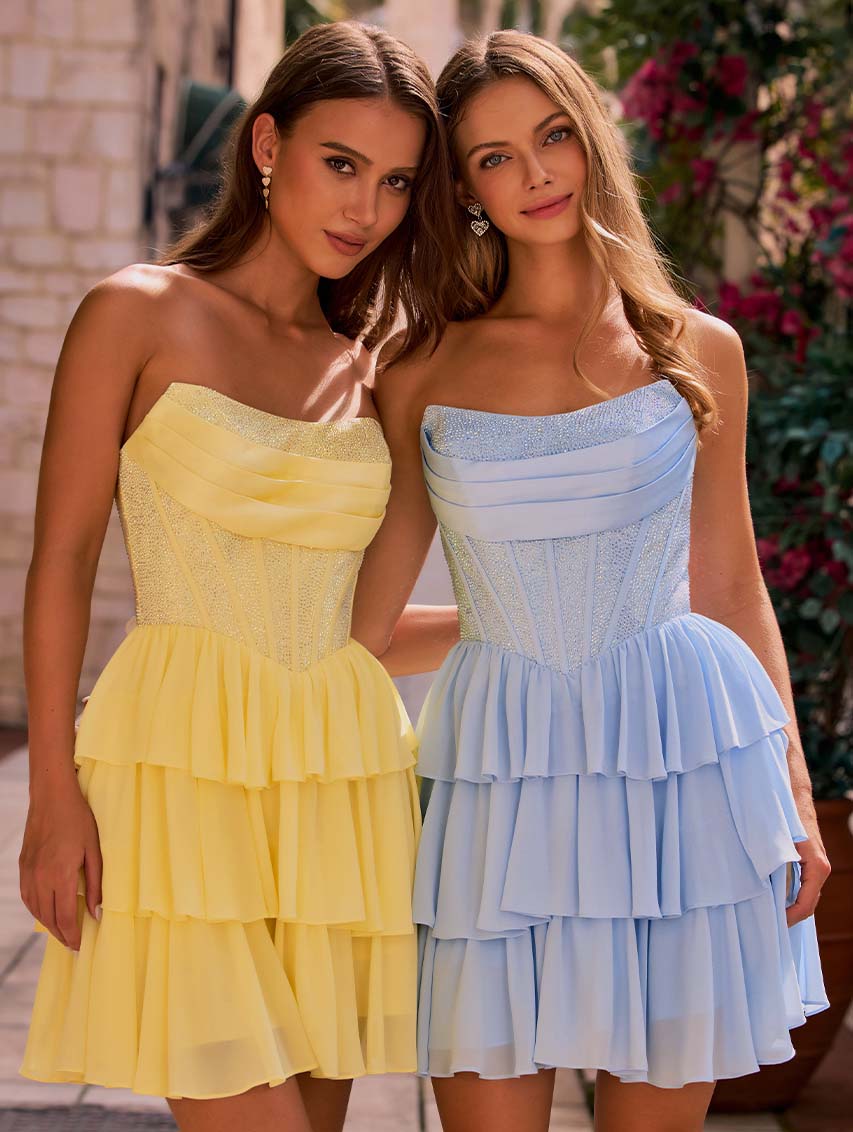
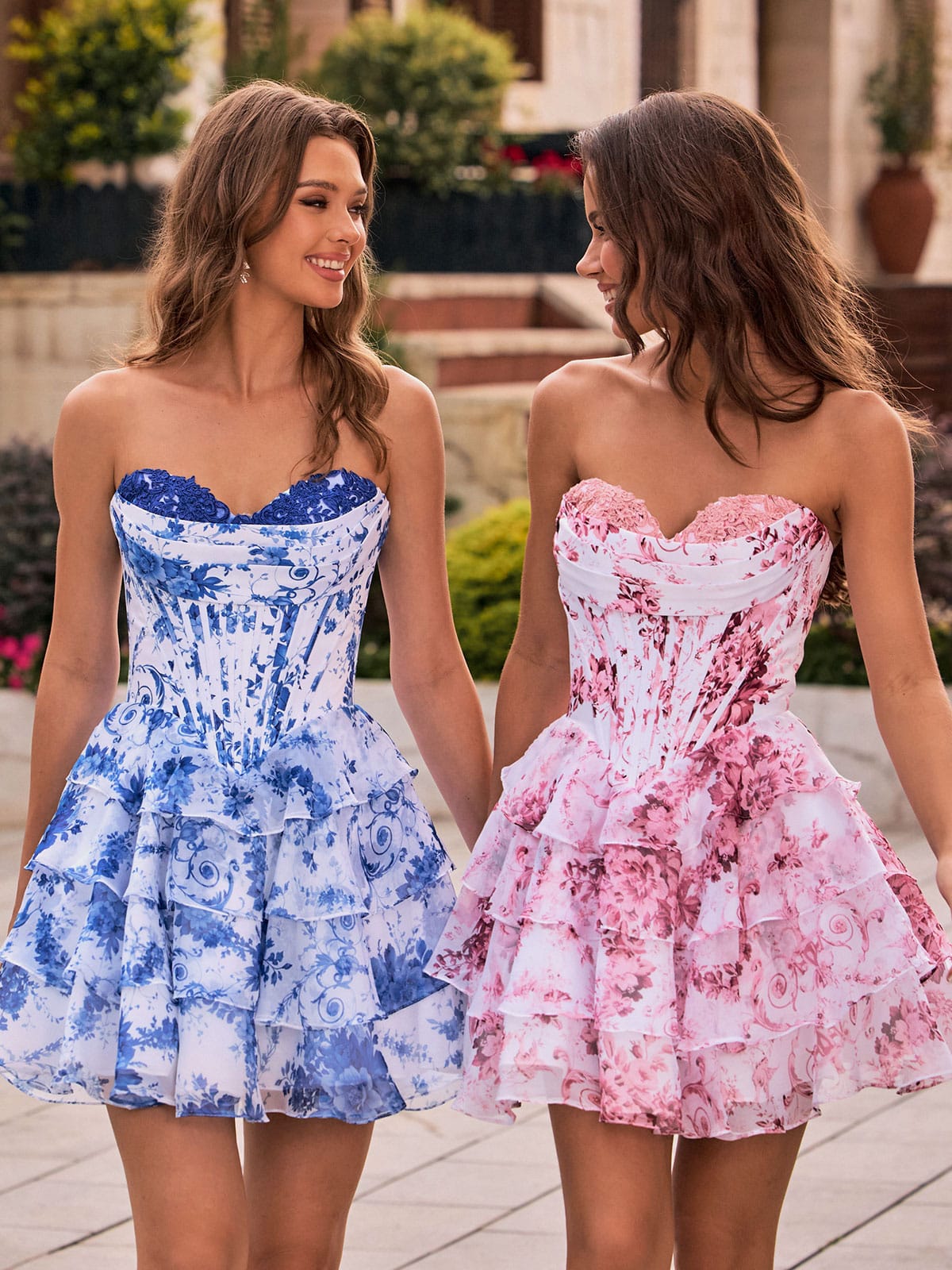
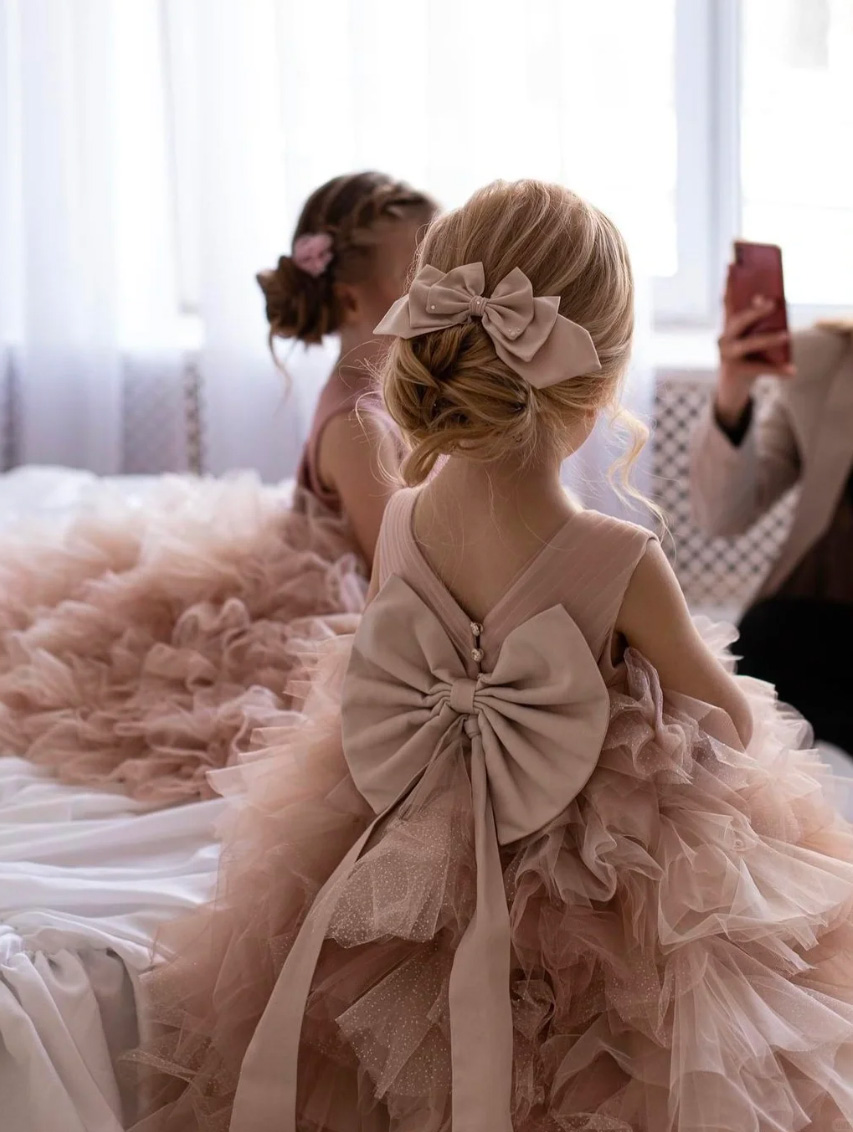
Then look below the waist. A sweep train extends the rear view, while tiered ruffles introduce repeated movement. Decide whether the backline or skirt should be the stronger feature, and use the other details to complete that choice.
Check the Backline through a Full Range of Movement
A V-back should keep its intended shape when you are doing more than standing for a photograph. Reach forward, turn and sit during a try-on. Notice whether the edges lie comfortably or begin to gape, pull or shift.
Check the front at the same time. Adjusting the shoulder fit can affect both the neckline and the back opening. If alterations are needed, explain that preserving the angle and depth of the V is part of the fit you want.
Try any undergarments or additional support with the actual gown. Their edges should work with the specific backline, including while seated or reaching. Review your school's prom guidelines when deciding on a deeper opening or sheer backing.
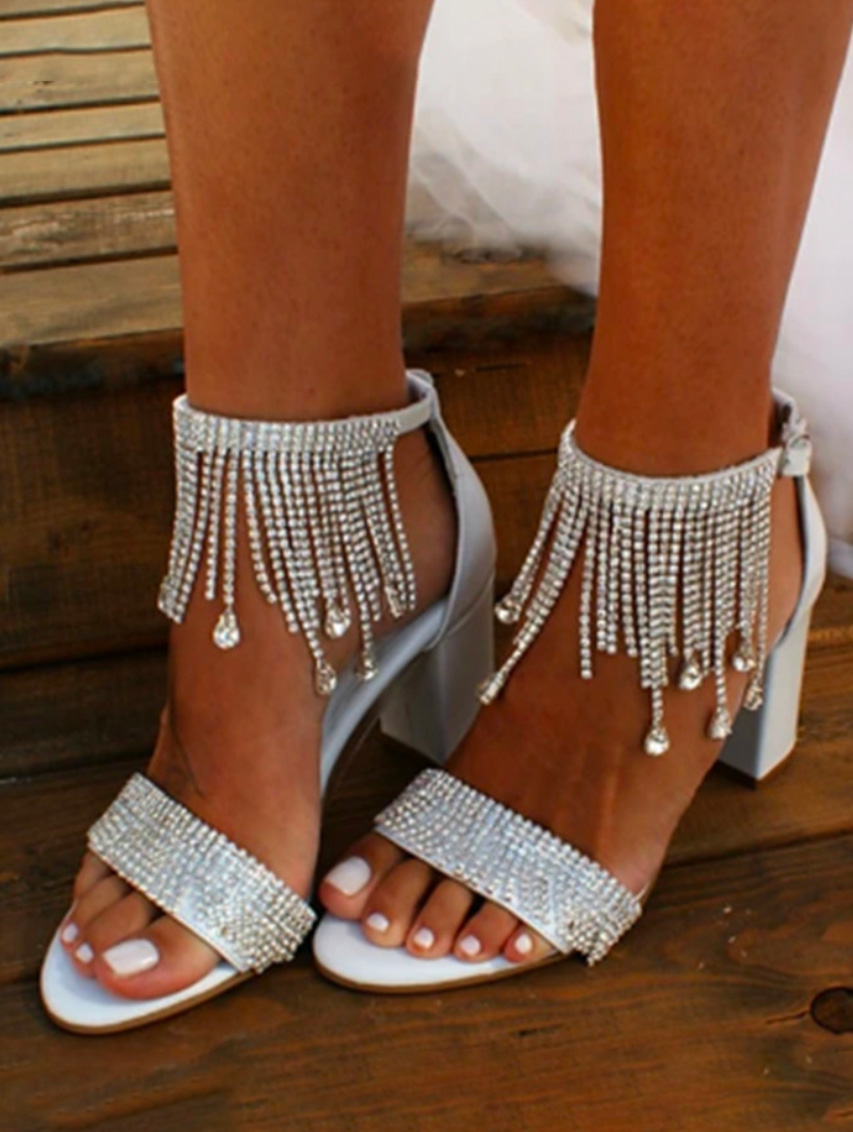
Finish the fitting with your planned shoes. Walk naturally to test the skirt, and check how any train moves behind you. The best choice is a gown whose back detail stays comfortable and whose hem lets you enjoy dinner, photos and dancing without repeated adjustment.
Style the Outfit to Keep the V in View
A V-back gives you a clear starting point for your hairstyle. An updo reveals both sides of the opening, while hair swept to one side shows part of the shape. If you prefer loose hair, try its length against the dress to see whether it covers the point or catches on embellishment.
Choose your main jewelry around the front neckline. A pendant can echo a front V, while earrings may be enough with a beaded or draped bodice. If you like a back necklace, compare its drop with the depth of the opening and make sure it does not cross awkwardly over the fabric edges.
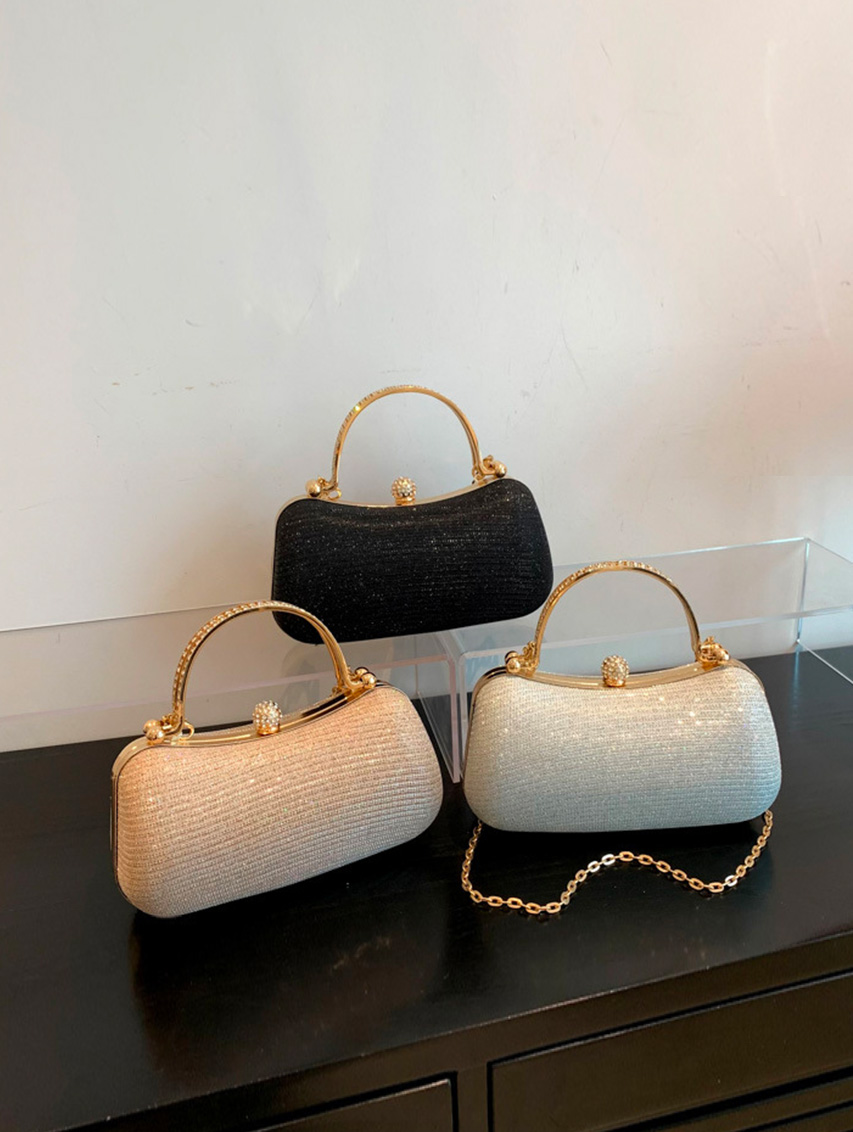
A clutch leaves the shoulder and backline free of a bag strap. Repeat a metallic finish or color from the gown, or keep the accessory simple when the bodice already has detailed lace or beadwork.
For travel and cooler outdoor moments, bring a wrap or jacket that sits comfortably over the shoulder sections. Complete the look with shoes that work with the skirt length and a coordinated accent in your date's outfit if desired.
Browse the complete prom dresses collection to compare more silhouettes, or explore open back prom dresses for other back shapes and strap arrangements.
V-Back Prom Dresses FAQs
What is a V-back prom dress?
A V-back prom dress has two back edges that angle downward toward a central point, forming a V shape. The opening can be shallow or deep, narrow or wide, and may include lace, mesh or decorative trim depending on the design.
Does a V-back dress also have a V-neck front?
Not necessarily. V-back describes the rear of the bodice. The front can have a different neckline, such as a square, scoop or cowl. Compare both views to decide whether you prefer repeated shapes or a contrast between front and back.
How do I choose between a shallow and deep V-back?
Compare the width of the opening, where its point sits and the coverage you prefer. A shallow V keeps the detail higher on the back, while a deeper one extends toward the waist. Check the individual fit and any event dress guidelines.
Which skirt silhouette works well with a V-back?
An A-line creates contrast between the inward-pointing backline and an expanding skirt. A sheath keeps the overall outline straighter, while a mermaid adds a lower flare. Look at where the V ends in relation to the waist and skirt.
Should I choose a plain or embellished V-back?
A plain edge emphasizes the shape itself. Lace softens the border, while beads or sequins add reflected light. Consider the decoration on the front and skirt so the back detail feels connected to the rest of the gown.
How should the edges of a V-back prom dress fit?
They should sit comfortably without persistent gaping or pulling. Check them while reaching forward, sitting and turning. Shoulder and torso fit can affect the backline, so assess the front and back together during fittings.
What hairstyle works with a V-back prom dress?
An updo shows the full V shape, while side-swept hair reveals one side and part of the center. If you wear your hair down, check where it falls against the opening and whether it catches on lace or beading.
How can I accessorize a V-back prom gown?